Showing posts with label cold. Show all posts

Teardrop Trailer Snow Camping

For Thankgiving this year, we decided to skip a family dinner and head up with two friends to Sierra Hot Springs with for their amazing Thanksgiving buffet. All hotels in the area were booked so we thought this would be a great time of year to do some teardrop camping in just a few inches of newly fallen snow.


We were not the only ones in the simple, meadow campground at the hot springs. Several other trailers, and a daring couple in an MSR backpacking tent, also braved the 10 degree overnight temperatures. We were lucky that several of the beautiful springs were just a short walk away and we did not have to do any cooking in the galley.


We realized a few things while camping in the snow with a teardrop trailer:

1. It was wonderfully warm at night with just a some fleece sheets, a feather comforter and our 12 volt electric blanket from Roadpro. It also helps to have a warm partner. :-)

2. Beware of any door locks, galley locks or hitch locks that could freeze when the temperature drops. We had an issue getting our key into the hitch lock the next morning. Use an ice prevention spray or lubricate the locks with Vaseline or grease.


3. Dress in layers and don't worry about sleeping in your clothes. It was actually warmer not to change from day clothes into pajamas, so we just slept in our daytime thermals.

4. Keep your shoes where you can jump right into them. I kept my winter boots under the trailer so I could grab them and put them on right away without having to keep the door to the trailer open and let out any residual heat.

5. Keeping water in a tank or bottles from freezing is challenging. Don't fill up your water tank before heading out and keep drinking water in the bed with you to keep it from icing up.


We were not allowed to have a campfire at this particular campground, but I see teardrop camping trips in the snow in our future with a campfire and some simple cooking in our future. It was so beautiful waking up in the morning to near silence with just the hooting of a few owls in the trees.


How to Teardrop Camp in the Rain

This weekend I went to a teardrop gathering right near my home, albeit just for an afternoon. The reason was that during the event, a large unseasonably cold storm hit our area which made for some wet and cold camping. So, what if you find yourself camping in a teardrop trailer in less-than-dry conditions? Several of my fellow (tough as nails) teardroppers cover up. Here are a few ways that you can protect yourself and your teardrop during inclement weather.

My trailer was not protected by any shelter this time, but having the galley roof raised over the cooking table does provide a little protection from rain, but not wind.

This teardrop has a large shade shelter up as well as a few added walls made from tarps. Having an outdoor rug also helps to keep the wet and mud from creeping into your trailer.

This trailer also has walls with some added windows for keeping and eye out for the sunshine.


An awning is helpful is keeping rain out of the bed area and giving you a dry place to put on warmer clothes or shoes.


This teardrop/standy is completely covered by a shelter. This might be necessary if your trailer leaks in any way.


It sometimes helps to rely on your neighbors for protection. Grouping trailers together, and forming a wall, can help protect from wind and rain.

Teardrop Trailer Sinks: Pros and Cons

The decision behind whether or not to have a sink in a teardrop is just as varied as the owners and styles of these tiny trailers. Having a sink already built into a galley can be very convenient and allows for quick cleanup of dishes or your hands and face while camping, however they do add a bit more complexity to a rather simple trailer. Many expensive and high-end teardrop trailers will have a sink and many smaller, less expensive teardrops will not.

Teardropper Doug Holser has a small sink with a 2-gallon tank in his Little Guy 5-Wide Platform

So, what are the other pros and cons having a sink in a teardrop trailer? I asked a few members of the TNTTT board their opinion and received a mix of answers. It will really depend on the type of teardrop you have, are building, or want to buy. It will also come down to how much work you want to do, repairs you want to make or how simple you want your teardrop life to be.

48Rob's teardrop trailer has everything and the kitchen sink

Pros 


How nice would it be to set up camp and have your water all ready to go for a cup of coffee? The pros of having a sink installed in a teardrop is that the water receptacle is ready and most likely your water tank is full of water. There is no need to fill up a water container at a campground for washing dishes or making dinner. Even though the tanks in most teardrop trailers are small (between 5-15 gallons) and the waste water tanks are sometimes about half the size or don't exist at all (the water is dumped via a hose into a portable waste water tank) having that water available for a day or two makes teardrop camping a little easier. The portable waste water system also keeps used graywater from being thrown into various parts of a campsite, which might attract critters.

A portable waste water tank can be placed under a teardrop trailer.

Having a sink with a faucet and a plug is also really useful for keeping yourself clean. I know when I camp, my hands and face seems to need to be washed of dirt and fire pit ash constantly. However, you will want to really think about how you use your sink. Do you want it large enough to wash a couple of dishes and frying pans or will a small bowl to wash your face and hands be enough?

"Yes, we have a sink with pull out sprayer faucet and a six gallon gas electric water heater. We love it because meal cleanup takes no more time than at home." 
Shadow Catcher on TNTT

webbaldo on the TNTTT used a dog dish for his teardrop sink.

Cons


One of the biggest cons mentioned on the forum was that a installed sink in a teardrop trailer can have multitude of problems. When you add plumbing into a very small space that bounces down the road, you have the potential of running into leaks, busted pipes and loose tubing. If you are a DIYer, this may not be an issue, but if you are purchasing a teardrop with a sink, take into consideration that you will probably need to make repairs down the road.

The type of pump to draw up water to the faucet is not really a con, but if you install an electrical pump, there are more issues that you will have to deal with if something happens with your battery or wiring. There are some water pumps that work off a 12V plug like the Whale GP1352 which can be submersed into a water tank.


You can also get a hand or foot pump for your sink. They don't rely on electricity, but are only good for a few squirts of water rather than an entire sinkload. Several complaints on the forum were about when a teardrop trailer is not quite level on the ground, the pump will not draw correctly from the tank.

The Combination Hand Pump and lowboy can be ordered from Tweety's

Many teardroppers decide to opt out of having or installing a sink since they do take up valuable galley and food prep space.
"I thought we would have a sink in Miss Piggy just because most teardrops I had seen in the past had one. I assumed it was part of the build. But once I started reading the comments here on the forum, I changed my mind. And so far I am glad I did! It was less work in the build, saved money, took up less of our much valued space, and gives us more flexibility at clean up time."

Vedette, owner and builder of Miss Piggy 

"If had a bigger trailer and could easily afford the counter and storage space that the tanks, plumbing and a decent sized sink would occupy I would have most likely installed it. But with a 4-1/2' wide trailer it just didn't seem worth it."
Oldragbaggers on TNTT

Alternatives to Teardrop Sinks


Teardroppers are the most creative people, if I do say so myself. If they don't have a sink, they make one. I personally do not have a sink in my teardrop trailer and have had to come up with my own system. We have about one or two five gallon water tanks that we use for storing water, another 1.5 gallon tank that is our "faucet" and two dish washing pans that we use as sinks. For hot water, we just heat up a pot on the stove or over the fire.

Our "faucet" is a slimline, fridge jug from WalMart.

Debbie and Randy, the builders and owners of Monstro on TNTT, have built an ingenious little sink washing station out of PVC, a dish basin and a metal water hand pump.


If you don't want to do your own pumping, Coleman sells a All-In-One Portable Sink that comes with a dish drainer, two tubs and a 2.5 gallon sink that pumps water with four D cell batteries or a
CPX™ 6 rechargeable battery.


If you want the luxury of hot water all the time, Coleman's On Demand Portable Water Heater will help keep that coffee warm and dirty hands clean.


Trailer photos courtesy of dholser and 48rob.


How do you keep your food cold?

Most teardrop trailers do not have the luxury of a full refrigerator. With limited galley space, most teardroppers rely on ice coolers and sometimes 12-volt portable coolers to keep their beer and steaks cold. There are several different ways to keep your food cold if you own a teardrop trailer and there are advantages and disadvantages to both of them.


So far, my husband and I have only used a regular cooler filled with ice to keep our food cold. We previously had a Coleman, but we've since upgraded to a "bear proof" and lockable cooler since we tend to camp in hungry bear territory. The advantages of this way of storing cold food is that these coolers don't use power and keep ice cold for at least 2-3 days depending on the outside air temperature. The disadvantages are that every 2-3 days we have to go hunting for ice which can sometimes run about $3-$7 a bag. On our next big trip, we are going to try to use dry ice. Another disadvantage to our particular teardrop design is that the galley does not have space for the cooler, so we have to keep it outside of the teardrop, and in bear territory, that means having to pack it away in the car at night or when we leave our site. All that lifting is hard on the back.


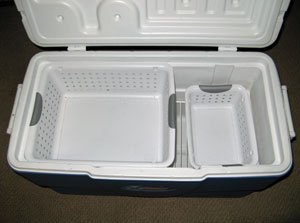
One thing that we have done with our cooler to keep melted ice from mixing with our food is to separate the food from the ice with a clear, plastic storage bin. We bring the bin into the house and fill it with our food and then carry it out to the cooler, place it inside and then pack the ice around it. The ice and the food stay separate and we can also use that clean ice for our margaritas.


Another tip I've seen from teardroppers is to line the sides and the top of your cooler with a reflective, insulation. These are sometimes called radiant barriers or bubble foil and are sold in rolls that you can cut to the size of your cooler.


Some teardroppers are lucky to have enough space in their galley to hold a small 12-volt cooler. These types of coolers can run off the teardrop or car battery or can be hooked up to a solar panel on the roof of the trailer. There is no need to buy ice and the cooler keeps food at a consistently 36 degree temperature. The disadvantage is that these types of coolers are pretty small (about 15-17 liters) and some food will need to be frozen or cooled before putting them into the 12-volt cooler. Also, if you are camping for a long time, you may need to have access to campground power to make sure your battery does not get drained.


How do you stay warm in a teardrop trailer?

Unfortunately, we live in the mountains where we are not able to do a lot of winter camping. We would love to, but many campgrounds and BLM areas are usually covered in snow. So we have to save our camping fun for the summer and fall months. In addition, camping in the mountains can be cool or cold even during the warmer times of year so we sometimes wear long johns, hats and other warm clothing items when we go to sleep in the teardrop.


Fortunately, a teardrop sleeping area is so small that usually just body heat will warm the space up in a short amount of time. If you don't like getting into a cold bed there are other ways to stay warm while teardrop camping. If you are lucky enough to have a battery installed in your teardrop, or if you are hooked up to power there are a few heating options. On cooler nights we will use a 12-volt electric car blanket just to warm up the bed. These cost about $30 and don't drain your battery. They will heat up for about 20 minutes before shutting off.

If it's really cold, we will plug in small 12-volt ceramic heater that warms up the sleeping space. This heater with a fan will drain your battery much faster and you'll notice that any lights you have on will dim while this thing is running. You only need to run it for about 10 minutes to warm up a teardrop bed area. We have also used our friends' propane heater for heat. The Mr. Heater Little Buddy can be placed on a shelf or stable area of a teardrop bed to heat up the space. Don't keep it on all night since a propane heater will deplete the oxygen in a small space very quickly.


Another way to keep warm is with a good, old-fashioned hot water bottle. A teardropping friend of mine has several in her bed: one for her back and one for her feet. She says they are still warm by morning.

One time while camping in 20 degree temps with some fellow teardroppers, we were so cold that we heated up foil-wrapped river rocks in the campfire and then placed them in our beds to warm them up. The hot rocks proceeded to melt my friend's sleeping bag.

This is not a recommended method of staying warm in a teardrop trailer.